Work · Consumer Electronics
Oloid · Ergonomic Mouse
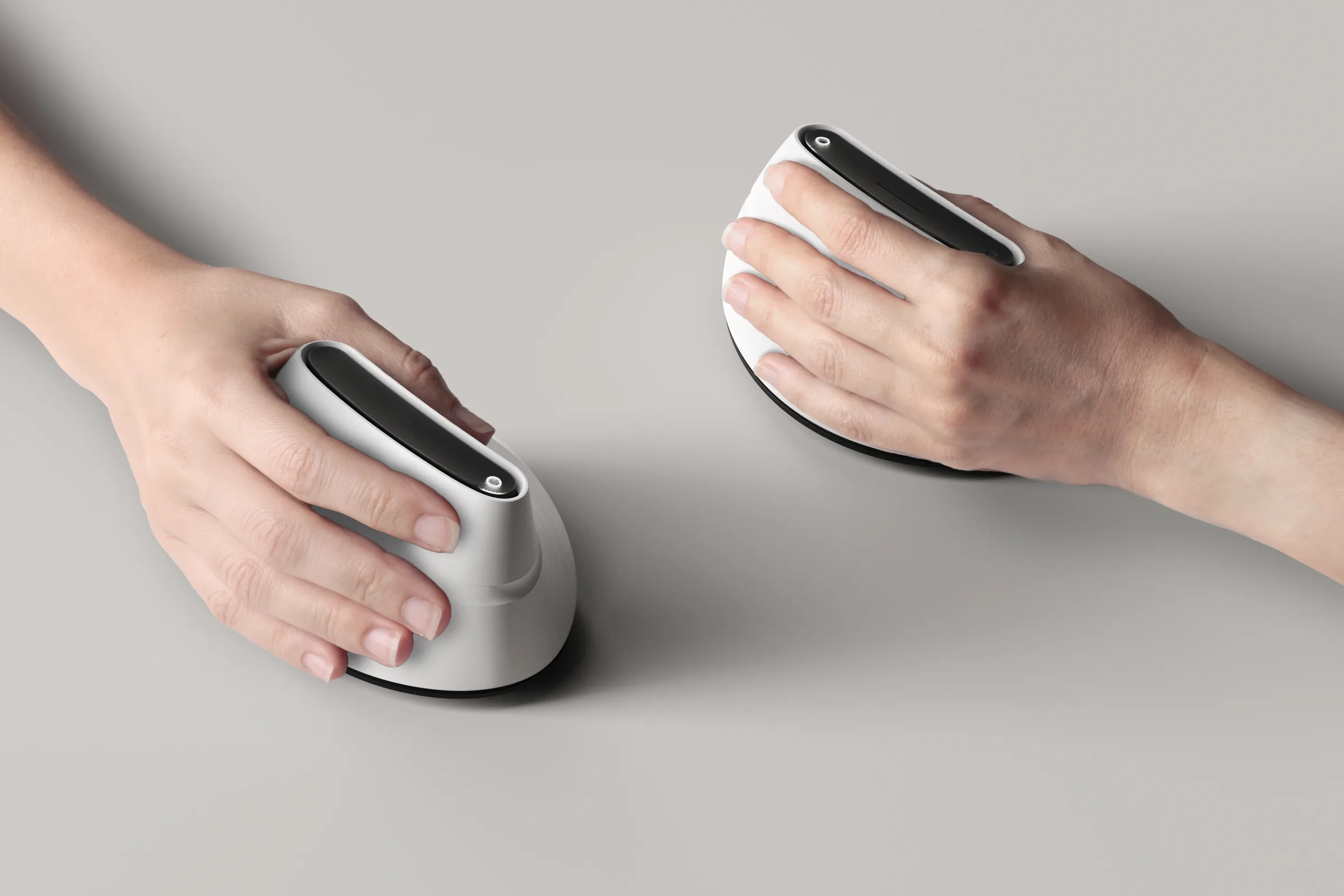
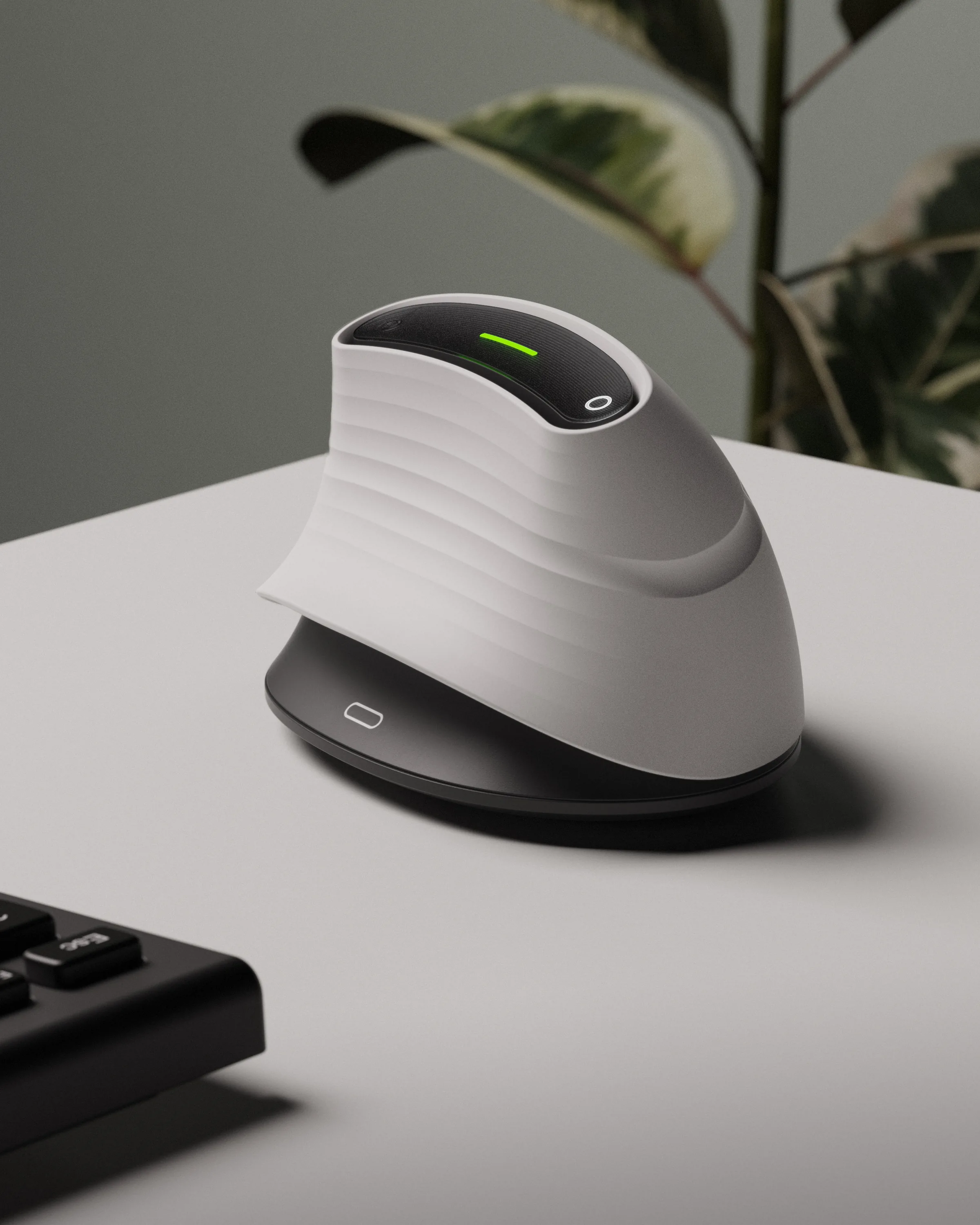
An ambidextrous vertical mouse that adapts to either hand. OLOID is a self-initiated project developed with Jorge Paez to rethink the ergonomic mouse for left and right-handed users alike.
Project details
- Client
- Self-initiated project
- In collaboration with
- Jorge Paez
- Sector
- Computer peripherals
- Services
- Industrial Design, Ergonomics, Prototyping, Visualization
Challenge
Most ergonomic mice are designed for right-handed users. Left-handed people get fewer options, often a mirrored copy or nothing at all.
The challenge was to design an ergonomic mouse that works in either hand without losing proper support. The project started with an in-depth study of current ergonomic mice through extensive use and tear-downs.
Key outcomes
One mouse for both hands
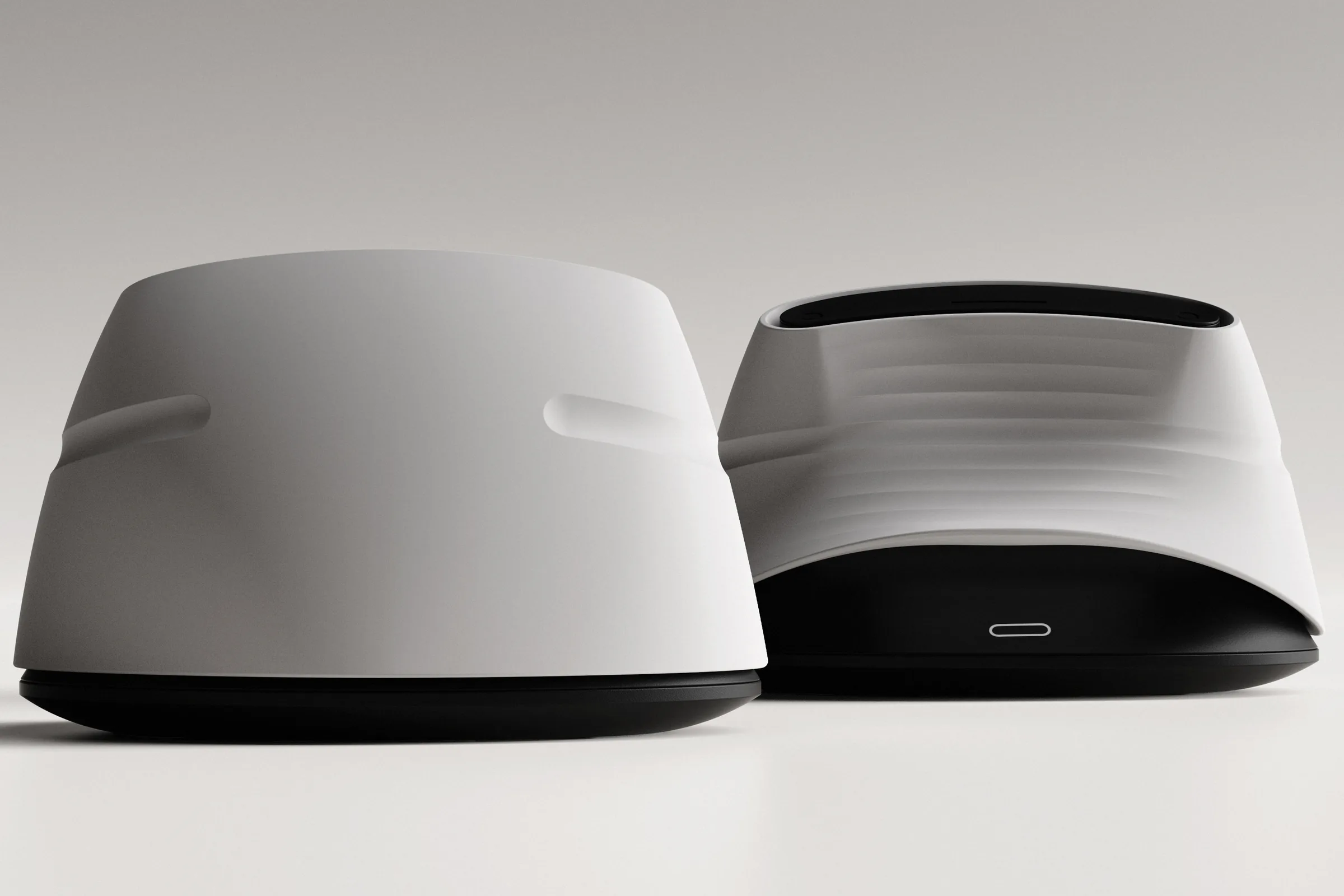
A symmetrical vertical form gives the same support to left and right-handed users.
Automatic hand detection
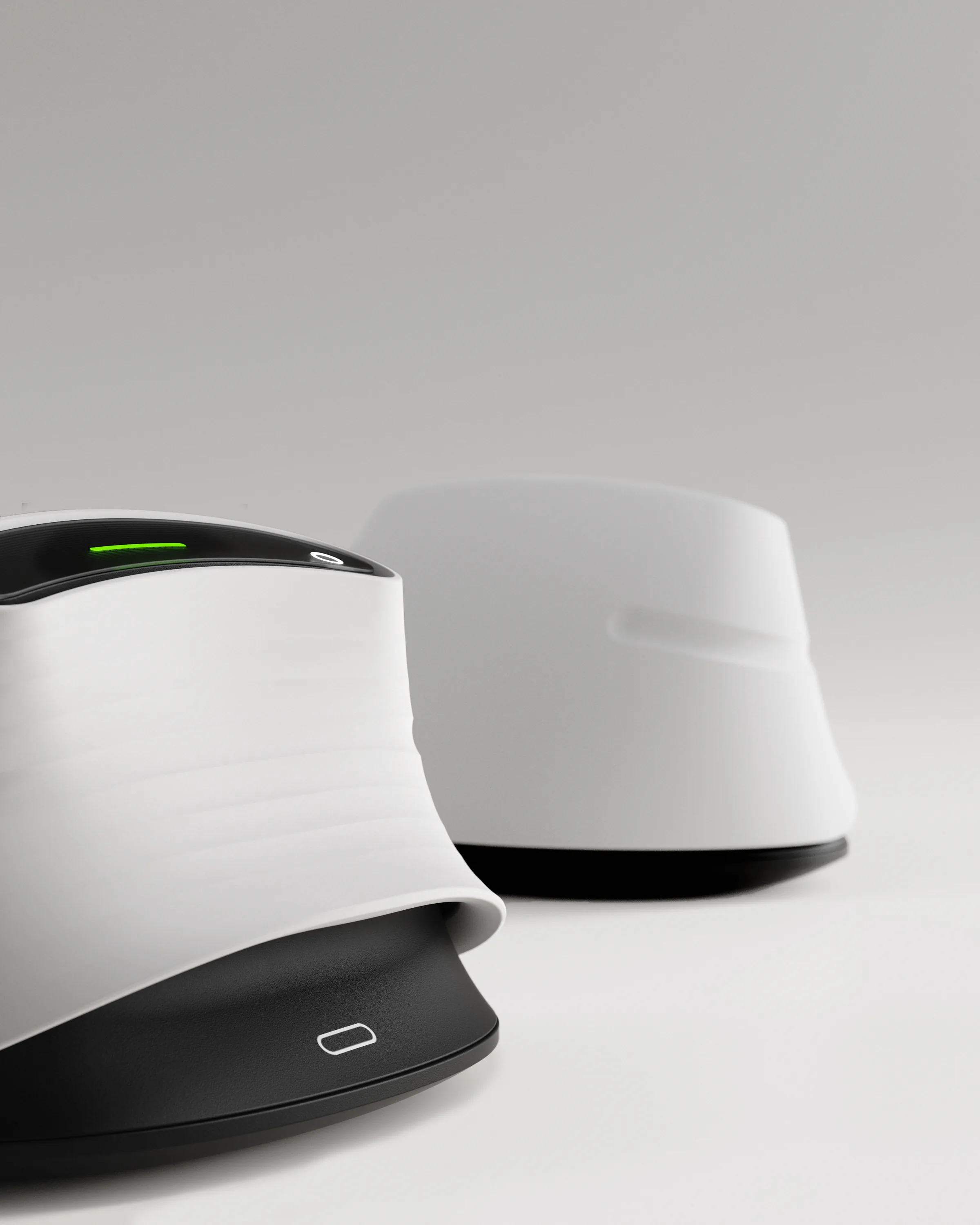
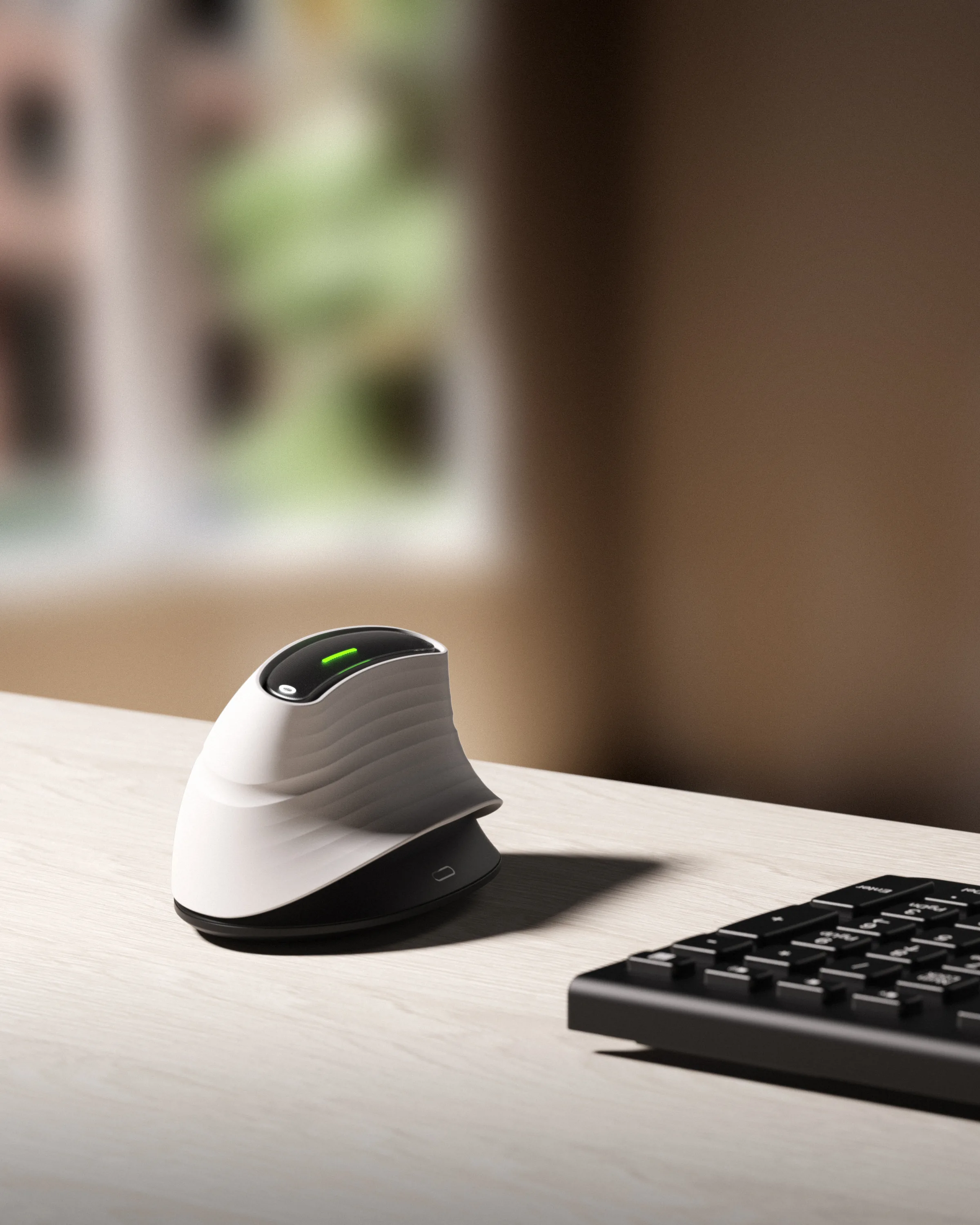
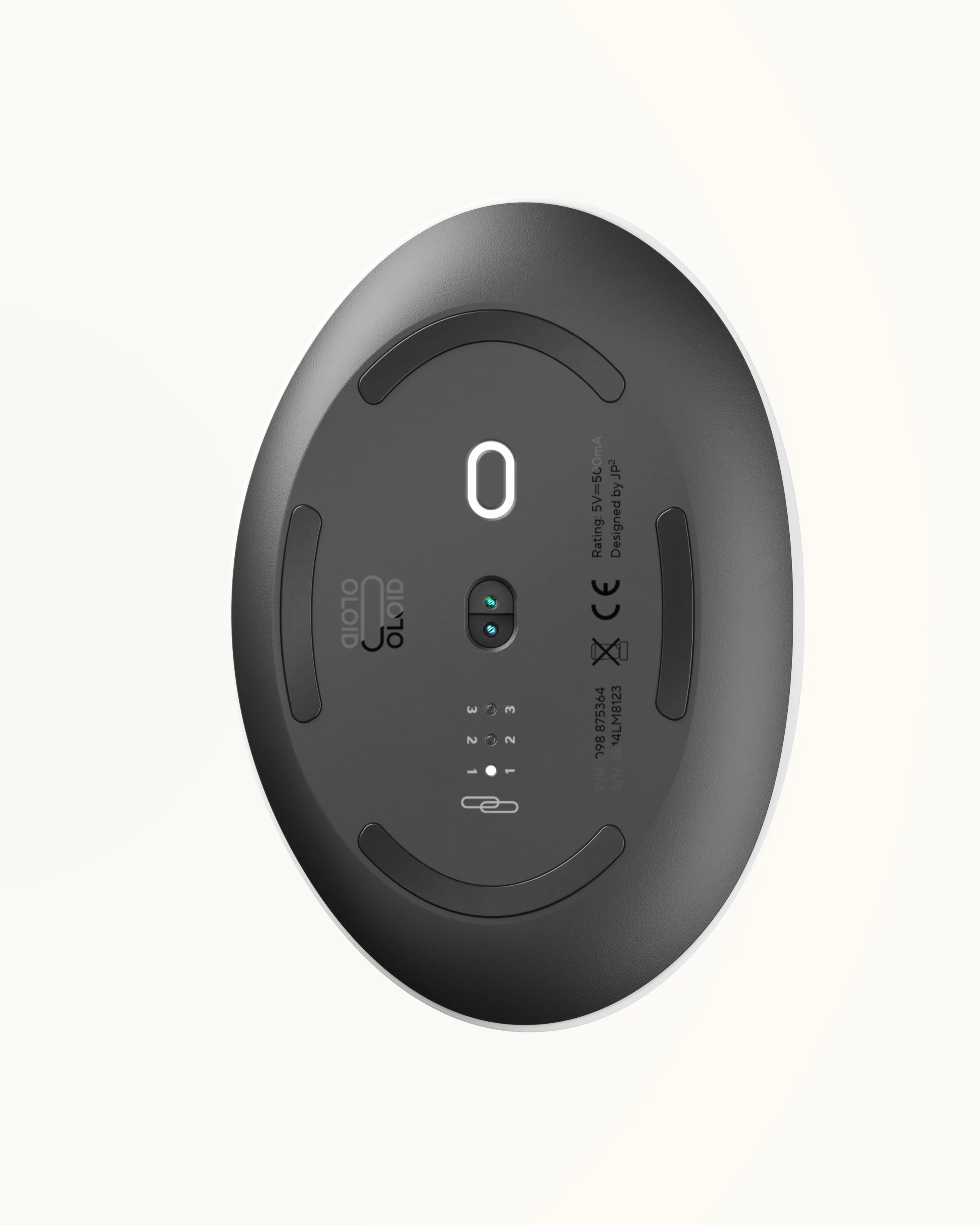
The mouse recognizes which hand is using it, activates the matching electronics and lights an indicator LED.
A distinctive form
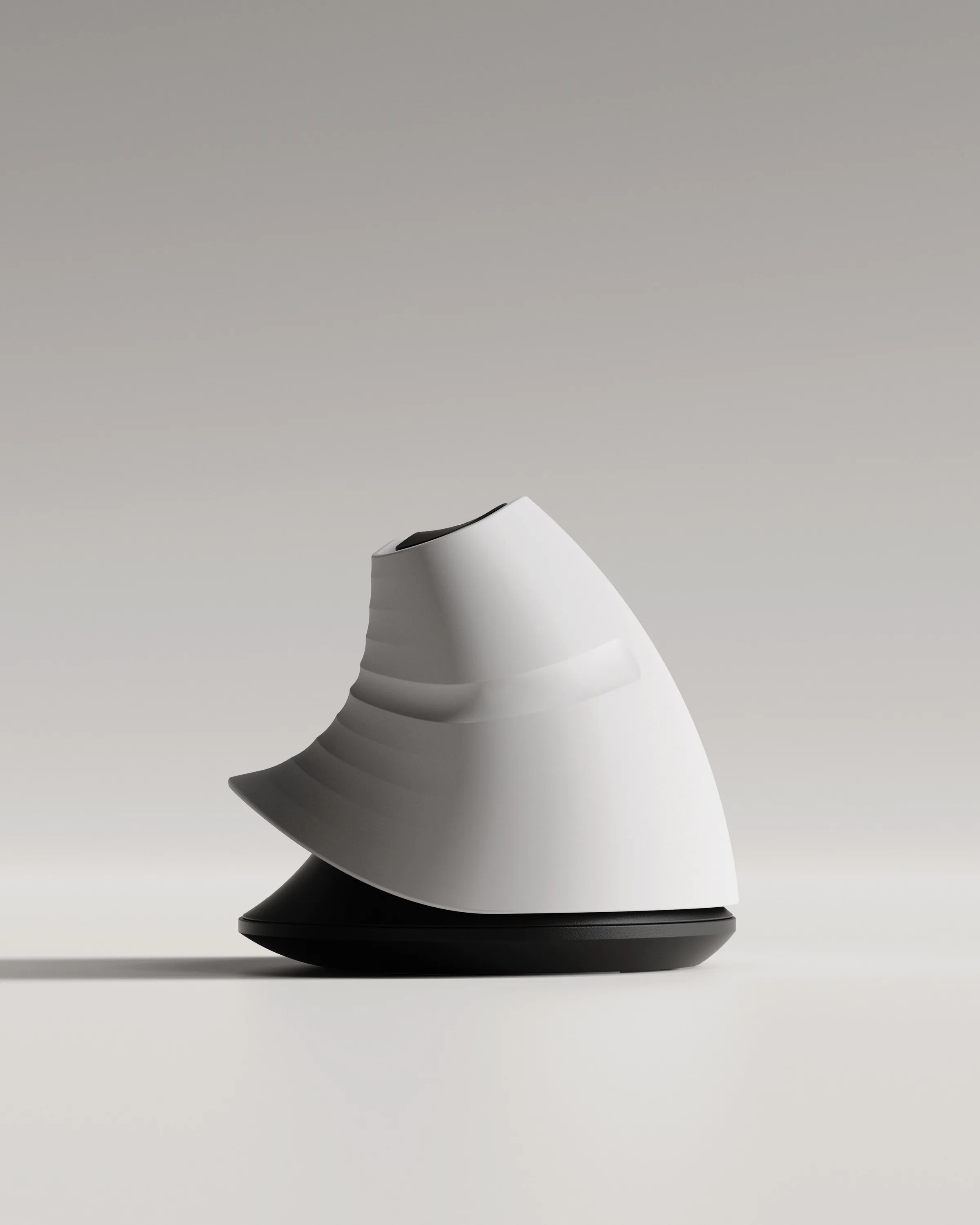
A floating interaction surface over a technical inner body, recognizable at a glance on any desk.
Solution
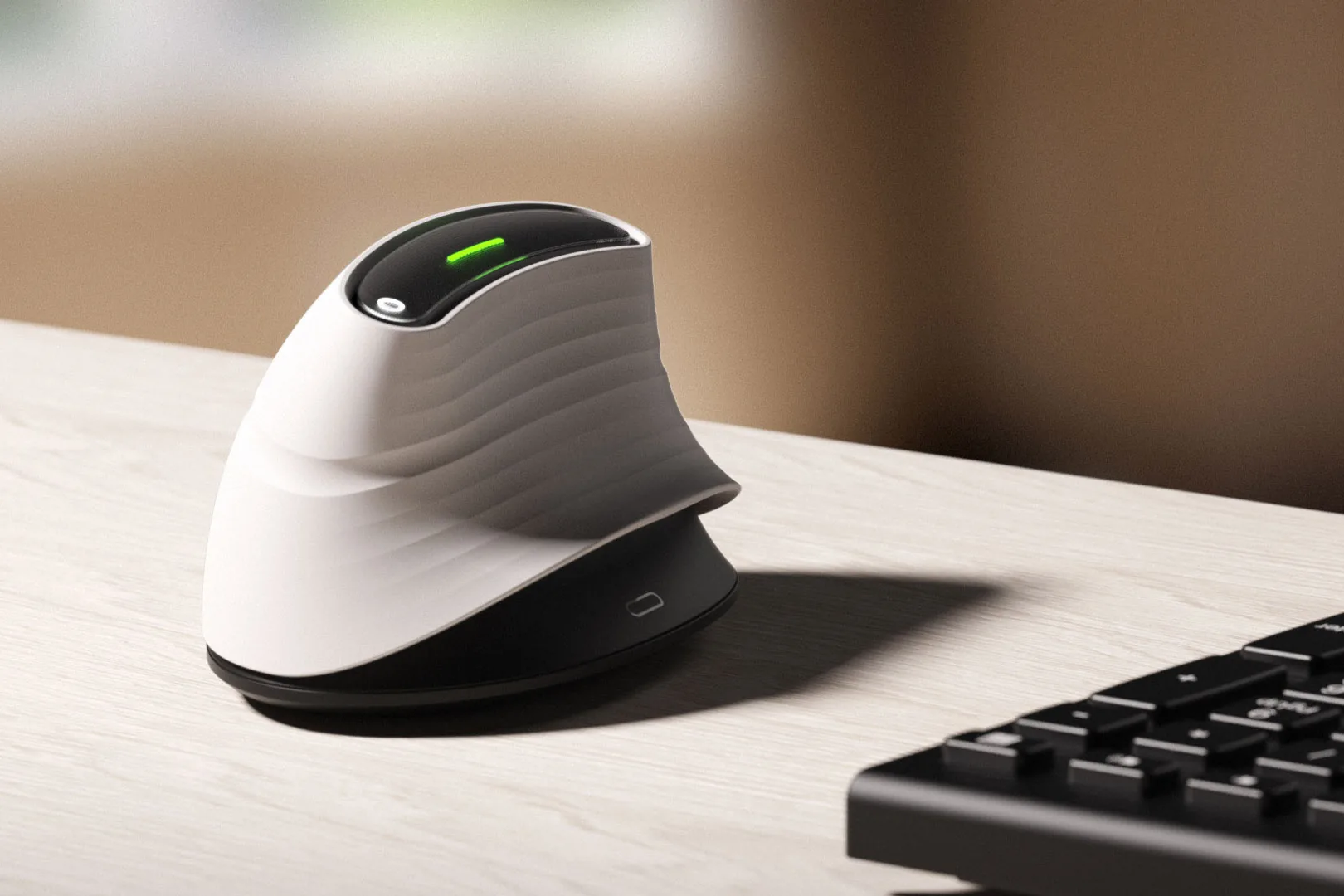
A vertical ambidextrous mouse with a floating interaction surface connected to a technology-filled inner body. The surface starts as an arched pill shape and becomes an off-center ellipse, with a flared section that works as a landing for the thumb.
A wave texture gives a tactile cue while scrolling with the thumb, and continues to the front to mark where the index finger scroll sensors are. OLOID detects whether it is used with the left or the right hand, activates the matching electronics and lights an LED on top. It connects to up to three devices via Bluetooth.
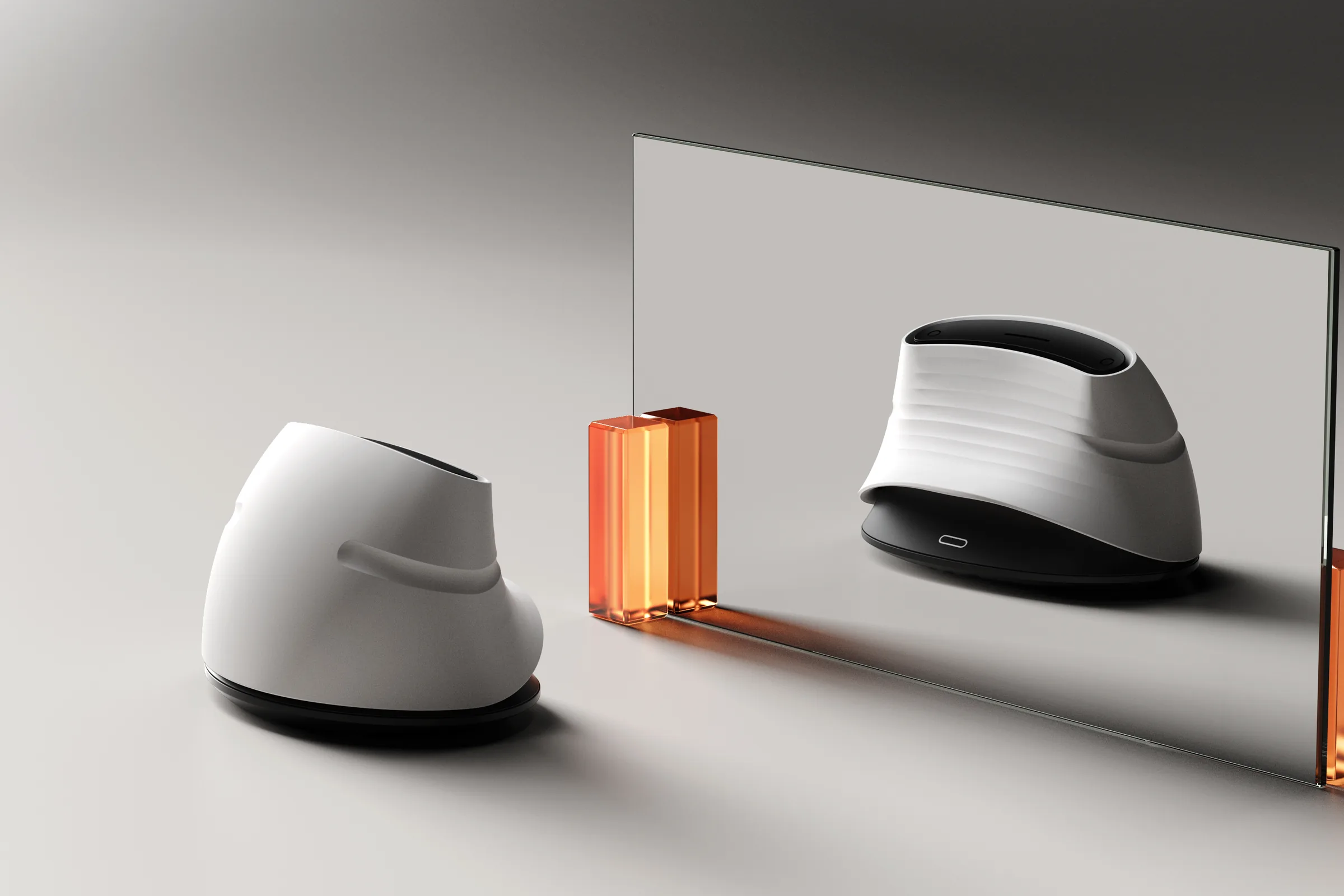
“Symmetry and ergonomics usually pull in opposite directions. A vertical form is where they meet, so one mouse can support any hand.”
Process
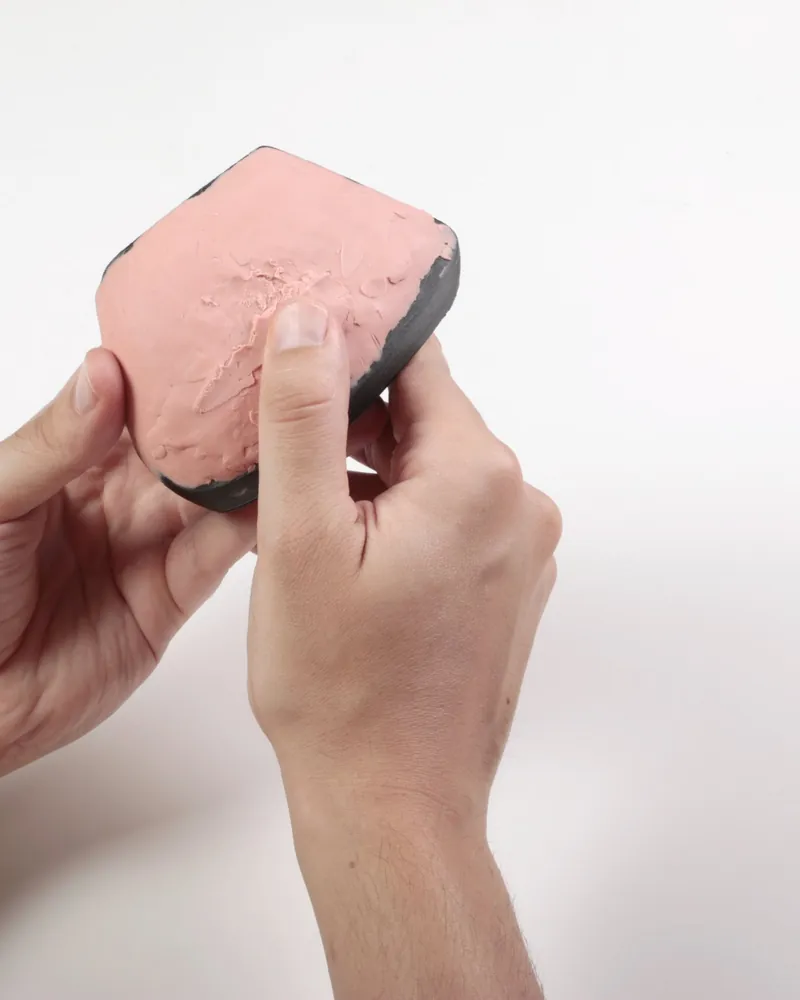
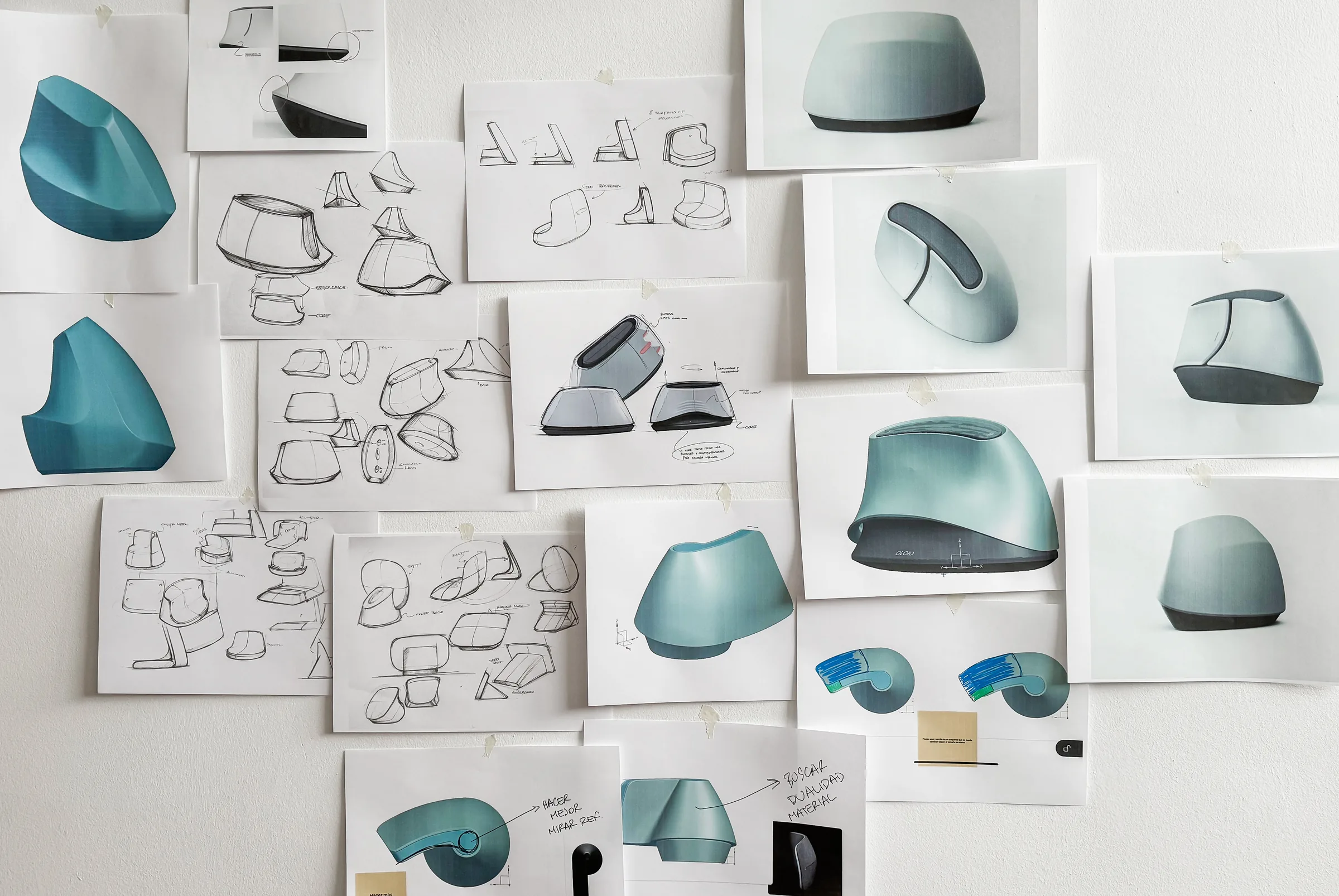
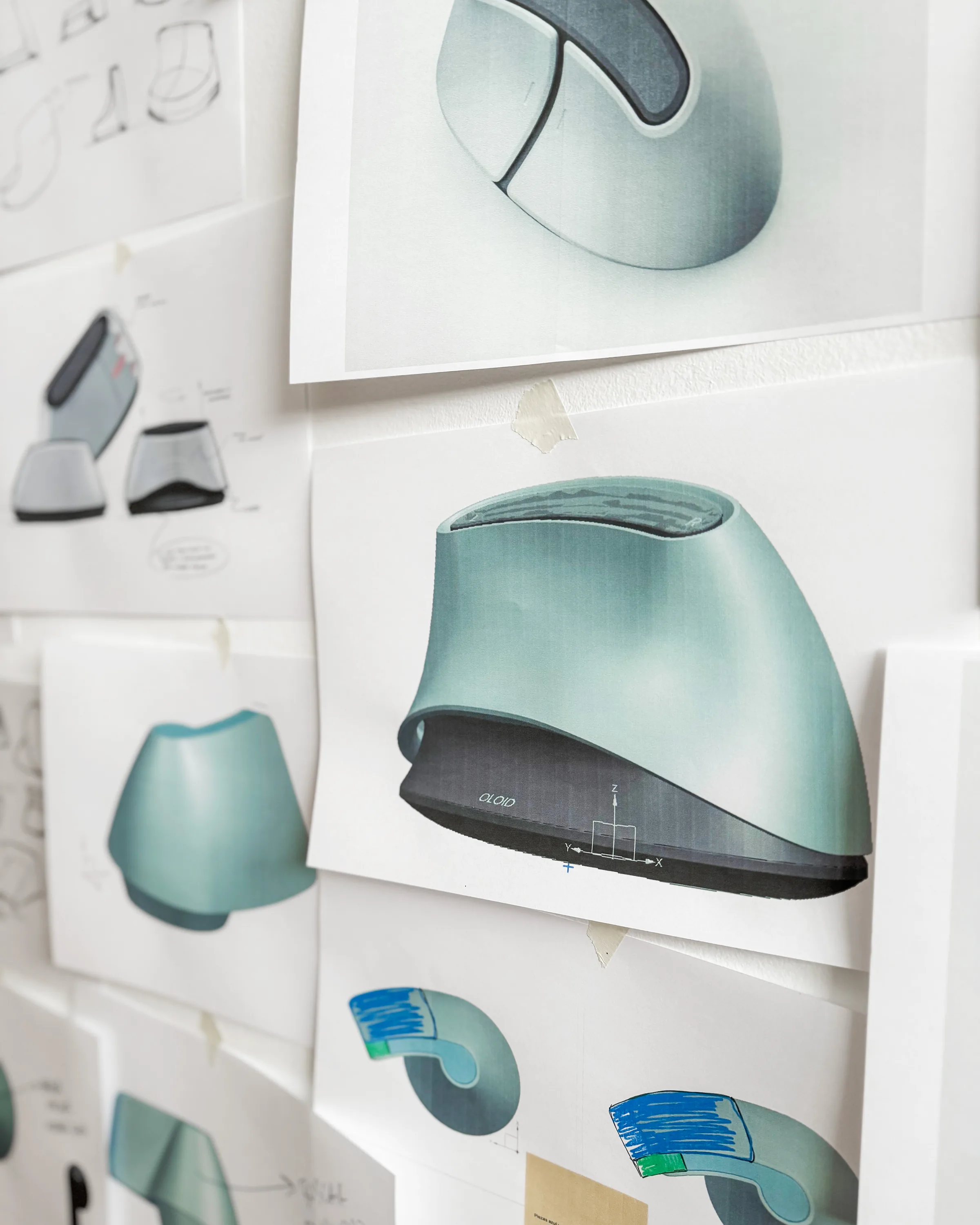
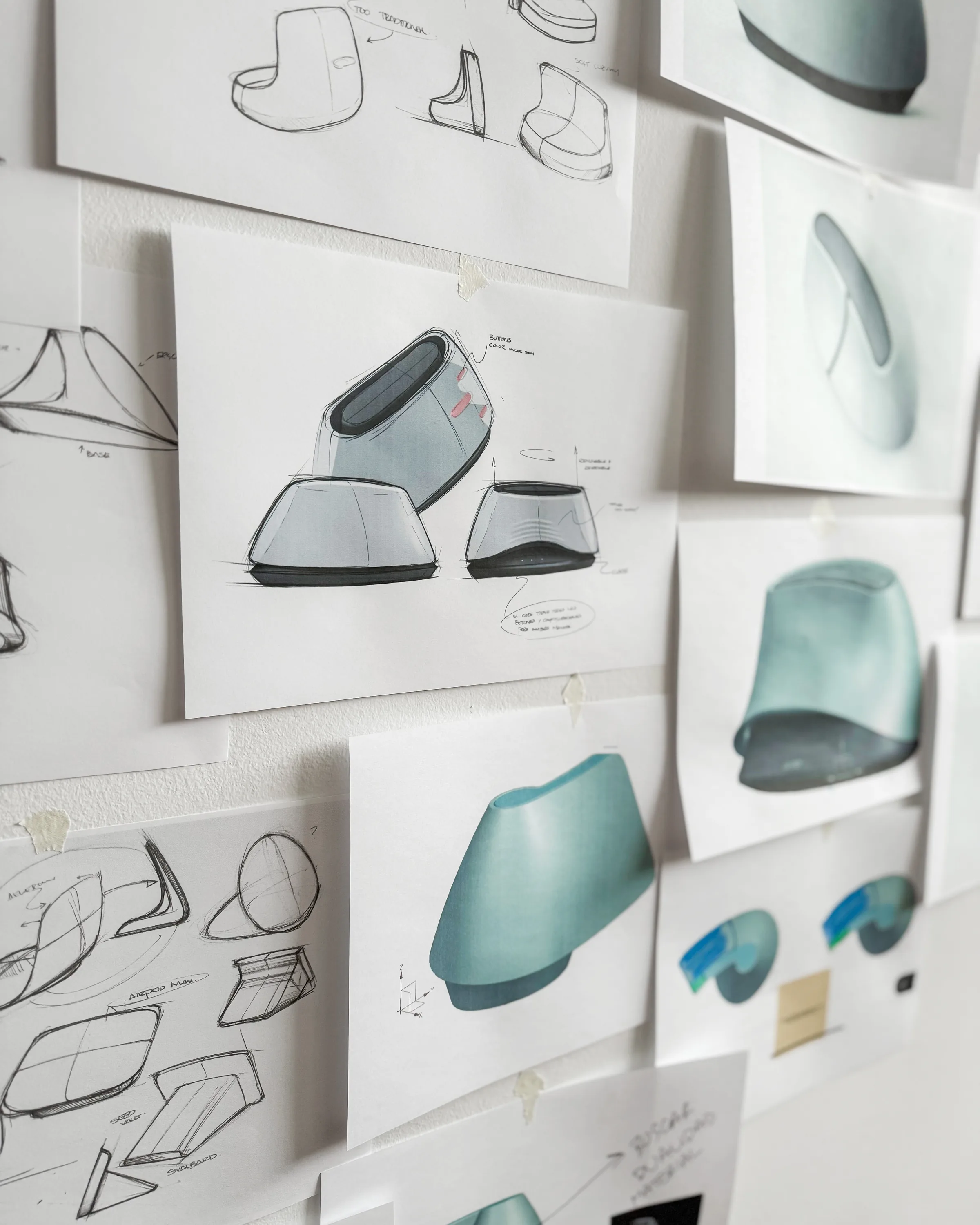
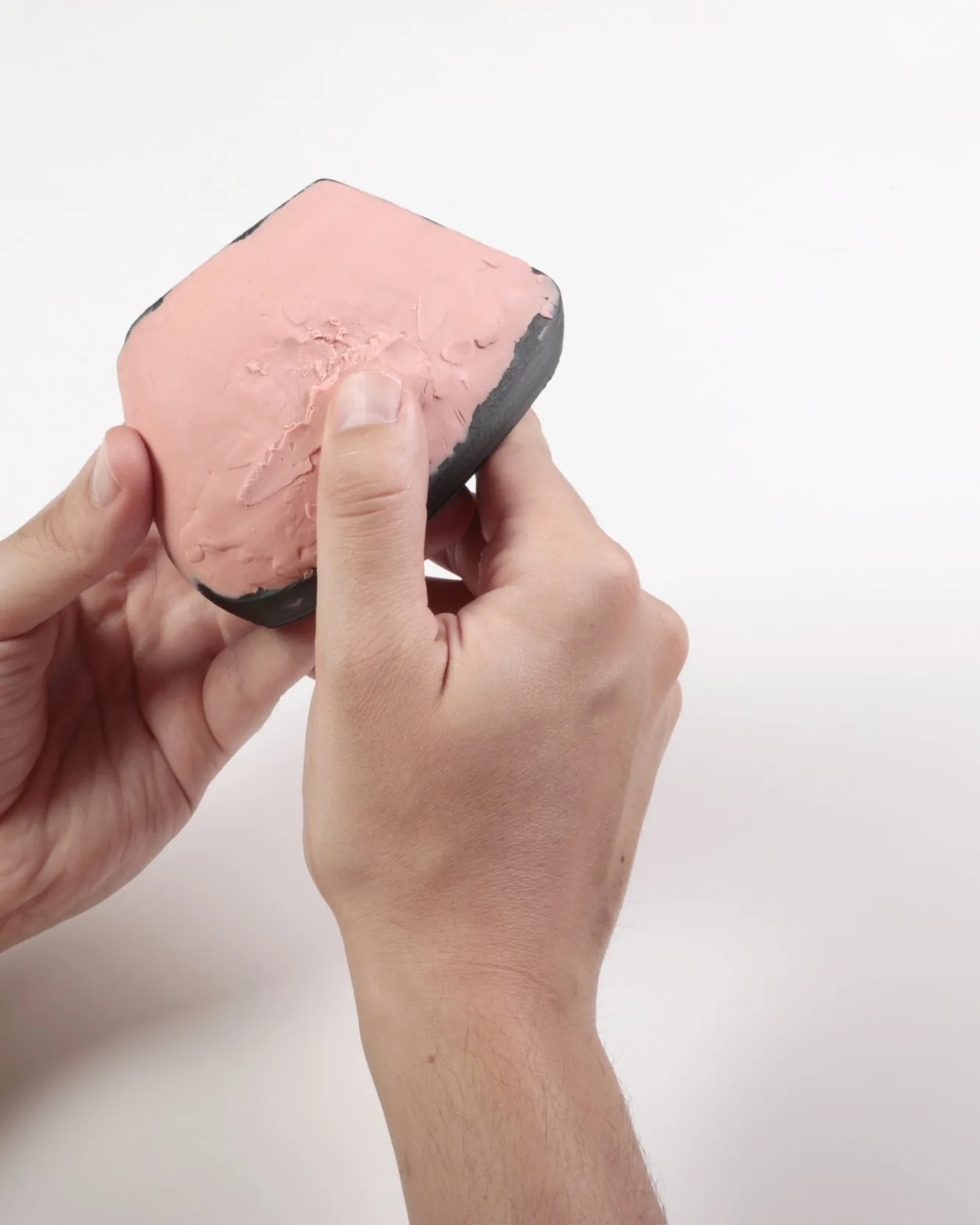
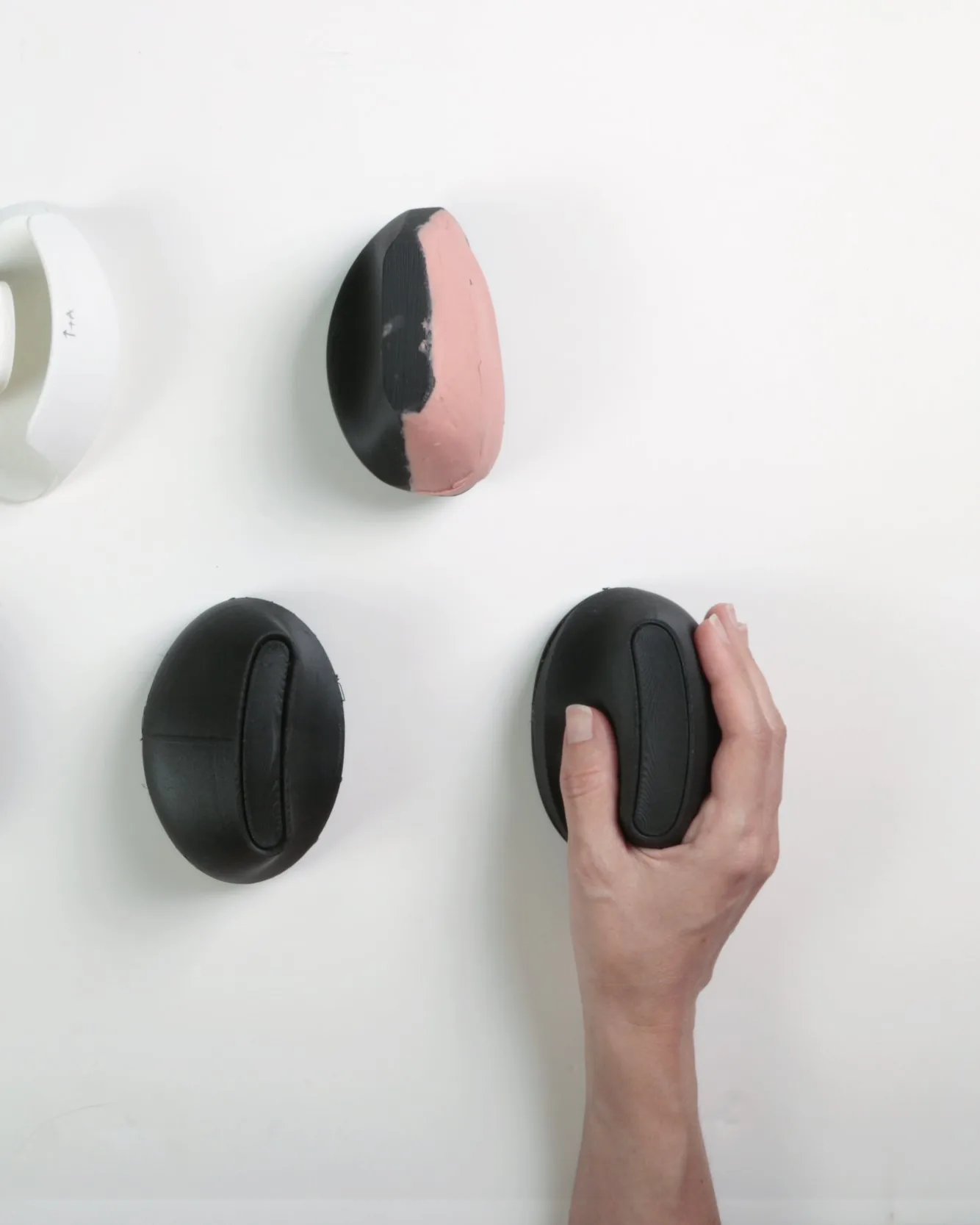
Use, tear-downs, sketches and many physical mockups helped balance symmetry and ergonomics until the form fit a wide range of hands.
-
01
Research
Extensive use and tear-downs of current ergonomic mice. Flat mice favor symmetry, vertical mice favor the wrist.
-
02
Direction
A vertical configuration offered the best balance between symmetry for ambidextrous use and ergonomics.
-
03
Ideation
Rapid iterations, sketches and hand-made mockups were tested to narrow down the design that best met users' needs.
-
04
Prototypes
Early prototypes confirmed that symmetry works for both hands. Size and wrist angle were then refined for a wide range of hand sizes.
- Versatile
- Intuitive
- Singular
Credits
Design
Product design and visualization: Josep Pedro and Jorge Paez
Questions
Can an ergonomic mouse work for both left and right-handed users?
Yes. A vertical configuration offers the best balance between symmetry and ergonomics. OLOID uses a symmetrical form, detects which hand is using it and activates the matching electronics.
How do you test ergonomics during product design?
With many physical mockups and prototypes in real hands. For OLOID, early prototypes confirmed the symmetry, and later ones refined the size and wrist angle for a wide range of hand sizes.
Designing a device people hold every day?
Tell me about your product. Ergonomics, form and production are worked together, from the first mockup to the final details.